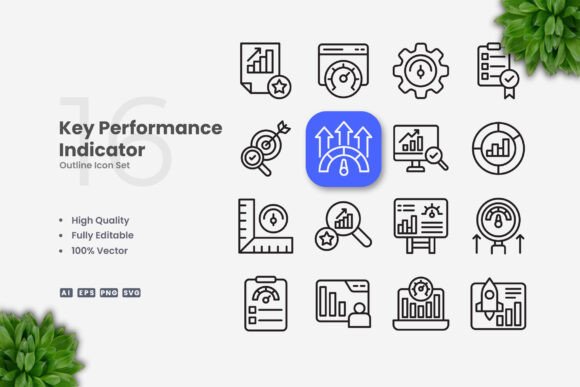
Key Performance Indicator Icons: A Designer's Stitch Test
When I first opened the Key Performance Indicator Icons package, my initial reaction wasn't about stitch counts or file formats. It was about the mood. These aren't just random shapes; they carry a specific energy that feels modern, efficient, and incredibly clean. As someone who has spent years turning digital files into tangible stitched goods, I know that not every graphic translates well to thread. Some designs look great on a screen but fall apart under the needle. This collection, however, strikes a balance that makes it genuinely exciting for both personal crafting and commercial product lines.
The design language here is simple and clean, which is exactly what you need when working with embroidery. There is no unnecessary clutter or overly complex detailing that could get lost in the fabric. The visual personality of these icons suggests precision and clarity, making them perfect for projects where the message needs to be understood instantly. Whether you are creating a custom tote bag for a corporate client or a personalized gift for a friend, the clean lines of Key Performance Indicator Icons ensure that the final result looks professional rather than messy.
From Screen to Stitch: A Real-World Scenario
Let me walk you through how I see this design playing out in a real project. Imagine you are an Etsy seller preparing a holiday collection for small business owners. You want to create a line of embroidered aprons and kitchen towels that celebrate the "data-driven" lifestyle of modern entrepreneurs. The challenge is finding a motif that represents analytics without looking too cold or corporate.
This is where Key Performance Indicator Icons shines. Instead of using generic arrows or charts that might feel dated, you can use these sleek graphics to add a touch of contemporary flair to a rustic linen towel. Picture a satin stitch outline of a graph icon centered on a dark navy apron. The clean strokes allow the texture of the linen to peek through slightly, adding depth while keeping the symbol recognizable. When a customer holds that finished product, they don't just see a decoration; they see a statement piece that aligns with their professional identity.
I also envision these icons being used on baby items, like a soft cotton onesie for a future engineer or data scientist. The simplicity of the design means it won't overwhelm the small surface area, and the lack of tiny, intricate details ensures it stays durable even after frequent washing. For a craft fair booth, these designs work beautifully as part of a cohesive brand identity. If you sell digital printables, these graphics serve as excellent assets for mockups, showing potential buyers exactly how the design will look on a sweatshirt or a cap before they even commit to buying.
Where the Design Excels in Embroidery Projects
The versatility of Key Performance Indicator Icons is one of its strongest selling points. Because the shapes are geometric and straightforward, they adapt well to various stitching techniques. You can utilize a combination of satin stitch for the outlines to give them a crisp, raised edge, or use fill stitch if you want a solid block of color that stands out against the background fabric. For a more subtle look, a running stitch can mimic the hand-drawn feel of a sketch, which adds a charming, handmade touch to the piece.
These icons are particularly effective for:
- Custom Apparel: Adding a logo to a team sweatshirt or a branded t-shirt for a startup event.
- Tote Bag Designs: Creating a minimalist yet impactful statement on canvas bags sold at boutique shops.
- Baby Embroidery: Gentle, clear symbols for nursery decor or infant clothing that remain legible over time.
- Holiday Embroidery: Incorporating performance metrics into festive gifts, like a chart icon on a Christmas stocking for a teacher or manager.
- Commercial Embroidery: High-volume production of patches or uniforms where consistency and speed are crucial.
In each of these scenarios, the design elevates the perceived value of the item. A plain tote bag becomes a stylish accessory; a basic pillow cover transforms into a piece of home decor. The clean aesthetic ensures that the embroidery doesn't look cheap, even if the base fabric is affordable.
Critical Considerations for Stitching Success
While the design is robust, no single file works perfectly for every situation. As an experienced reviewer, I have to point out where you need to exercise caution. Key Performance Indicator Icons relies on clean lines, which means that on textured fabrics like heavy denim or bouclé, the definition might soften. If you are planning to stitch this onto a thick, nubby sweater, the fine details could get swallowed by the fabric weave.
Similarly, stretchy fabrics require careful handling. If you are working on a knit cap or a jersey shirt, you must use the appropriate stabilizer to prevent puckering. Without proper support, the tension of the stitches might distort the geometric shape, turning a sharp square into a wobbly blob. This is especially true for smaller hoop sizes. If your machine's hoop limit is tight, you may need to scale down the design, but be warned: scaling too much can eliminate the stroke weight entirely, leaving you with nothing but faint dots.
Dense stitch areas can also be a concern. While the icons are generally open, filling them completely can make the fabric stiff. For products that need to drape softly, like a baby blanket or a lightweight scarf, consider using a lighter fill or just outlining the shape. Dark fabrics present another variable; while the design allows for color changes, you must ensure high contrast between the thread and the background. A light grey icon on a black background might disappear unless you use a bright, contrasting thread color.
Practical Notes for the Modern Maker
If you are ready to incorporate Key Performance Indicator Icons into your workflow, there are a few steps you should take before running a full production batch. First, always test the design on scrap fabric. This is non-negotiable. You need to verify how the thread colors interact with your specific material and check the stitch density to ensure the fabric isn't becoming too rigid.
Review the stitch density settings in your digitizing software. Since the original description mentions that you can resize and edit stroke weight, you have the flexibility to adjust the design for different applications. However, do not assume the default settings are perfect for every fabric type. Adjusting the density can make the difference between a crisp, professional finish and a muddy, indistinct mess.
It is also vital to inspect the small details closely. Even though the design is simple, zoom in on the corners and intersections. Are they sharp? Do they overlap cleanly? If you are producing these for a commercial market, such as an Etsy listing or a boutique brand, attention to detail is what builds customer trust. A sloppy stitch job can ruin the reputation of a handmade product, regardless of how beautiful the concept is.
Finally, confirm the licensing terms before selling any finished items. While the design is described as versatile for websites, apps, and print, the rules for commercial embroidery usage can vary. Ensure you have the right to sell the physical goods created from this embroidery file. Once you have verified the license, tested the stitch quality, and chosen the right stabilizer, you are ready to create something amazing.
In conclusion, Key Performance Indicator Icons is a practical, high-value asset for designers and makers who appreciate clean aesthetics. It bridges the gap between digital precision and tactile warmth, offering endless possibilities for custom apparel, personalized gifts, and small shop products. By understanding its strengths and respecting its limitations, you can turn a simple set of graphics into a standout finished product that customers will love.